.svg)
“Having an AED in officers' vehicles is not anything new. The bigger aspect of the AED from Avive was that they didn't have to do anything else with it. They don't have to monitor it. We're monitoring that entire AED for them. We can tell you what the condition is, the battery, when you need to replace the pads, all of that. And then we can go ahead and make it as easy as possible for that police officer.”
Save Story | McKinney PD
The McKinney Model: Equipping Law Enforcement with Connected AEDs That Save Lives
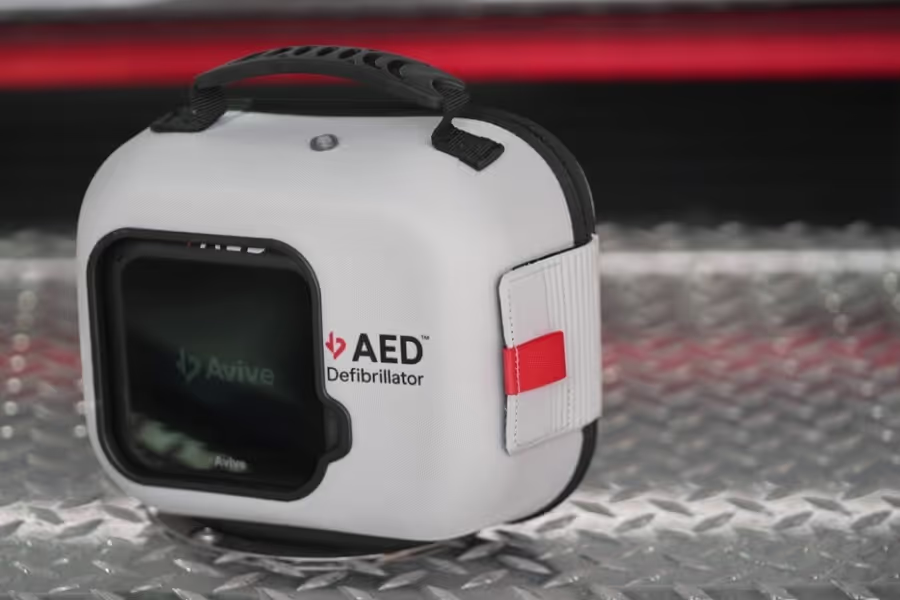
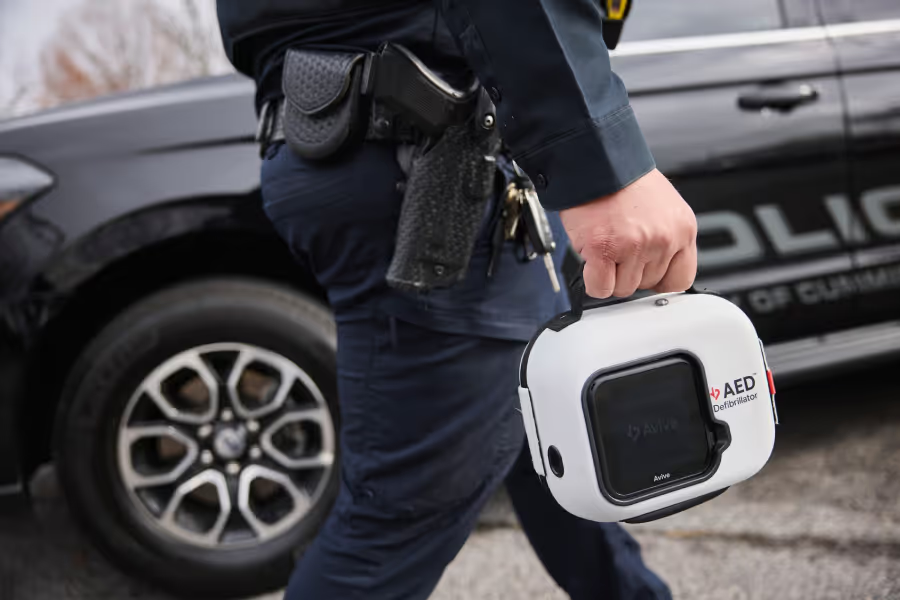
In August 2025, 66-year-old Jim Milsap went into sudden cardiac arrest while riding in a vehicle approaching McKinney, Texas - and survived against extraordinary odds. First on scene were McKinney Police Officers Zac Hamilton and Sergeant Farrell Richie, who arrived before fire and EMS and immediately deployed their Avive Connect AED®, defibrillating Jim several times before his pulse was restored. Just months earlier, the McKinney Police Department had equipped every patrol vehicle with Avive AEDs and ensured all officers were fully trained in CPR and AED use. Behind that readiness was a deliberate, technology-driven strategy - including Avive's REALConnect™ platform, which keeps every device monitored and field-ready without placing any additional burden on officers. And with the city's new McKinney Neighborhood Heroes Program now expanding that same life-saving capability to trained civilians across the community, McKinney is building a future where no one has to wait too long for help to arrive.
Location:
McKinney, TX
Avive Connect AED®s:
200
Avive Connect AED®s with McKinney PD:
60



“It really just makes everything very simple in a chaotic scene. The audible instructions are very loud and clear and as soon as the metrodone kind of clicked in, I started to match the rhythm, which helped a lot. When it's ready to shock, it's very clear to back away.”
Officer Zac Hamilton
McKinney Police Department
53 SECONDS
from AED activation to pads placed

Chief Paul Dow
McKinney Fire Department
On August 14th, 2025, Jim Milsap was riding in a vehicle approaching McKinney, TX when he slumped over, unresponsive. His son Chris, who was driving, pulled over, dragged his father from the vehicle, and flagged down a passing pedestrian to call 911. What happened next was not a matter of luck. It was the direct result of a decision the McKinney Police Department had made just months earlier: placing Avive Connect AEDs in every patrol vehicle and ensuring all patrol officers were trained in CPR and AED use.
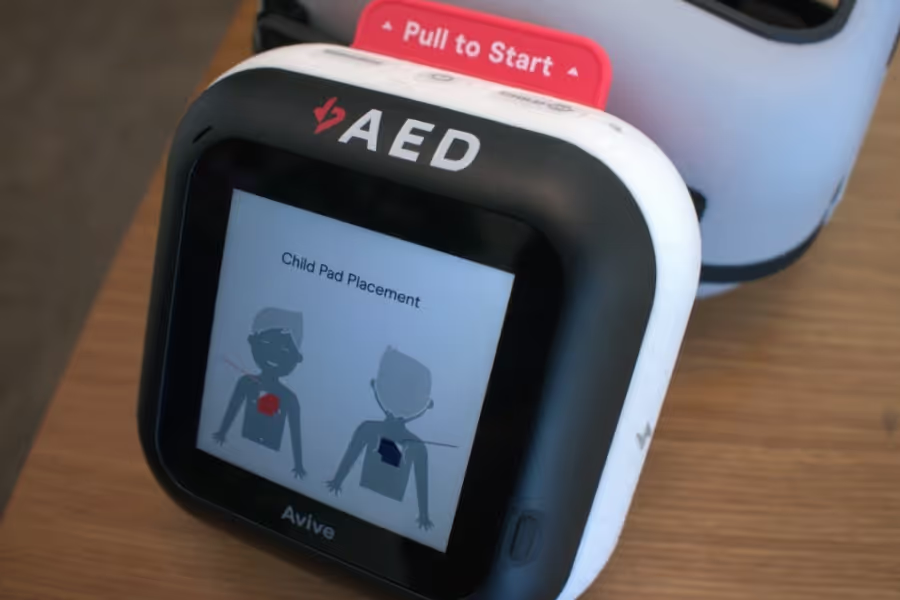
Officer Zac Hamilton and Sergeant Farrell Richie of the Mckinney Police Department heard the emergency call over the radio and were only seconds away. They arrived on scene before fire and EMS crews, and deployed their Avive AED. Officer Hamilton later recalled the moment, realizing he was performing chest compressions too quickly until the AED's metronome kicked in and anchored him. "Once the metronome started playing, it really just makes everything very simple in a chaotic scene," he said. The device's loud, clear audible instructions guided him through every step, from adjusting his compression rhythm to knowing exactly when to clear for a shock.
The Avive AED identified a shockable rhythm and delivered a life-saving shock before fire and EMS even arrived. In total, Jim was defibrillated seven times. His pulse was restored en route to the hospital. He woke from a coma eight days later, having survived what doctors would later describe as an extremely rare cardiac condition - one that very few people live through. For Jim, having raised three kids on his own and now the proud grandfather to eight grandchildren, the stakes could not have been higher. "I'm not ready to cash it in," he said simply. His son Chris, who performed CPR, had lost his mother just months earlier in May 2025 - stating that “being able to look my father in the eye every single day since is a true blessing”.
None of this would have been possible without deliberate preparation and the right technology. McKinney Fire Chief Paul Dow, who helped spearhead the program, emphasized that simply placing AEDs in police vehicles wasn't enough: the key was making the entire system effortless for officers. Through Avive’s REALConnect platform, the department remotely monitors every device's battery, pad condition, and readiness status, so officers never have to think about maintenance. "All we want you to do is get trained and utilize the AEDs when it's appropriate, we'll manage everything else on the back end," Chief Dow explained. Emergency physician Dr. Mark Maynard reinforced the life-or-death math behind this approach: every minute without defibrillation reduces survival odds by roughly 10%. By getting trained officers to the scene first, that window of survival extends.
McKinney isn't stopping with its police fleet. The city is now building out its 4 Minute Community™ initiative (which they named the McKinney Neighborhood Heroes Program) which aims to put Avive AEDs directly in the hands of trained civilians throughout the community. The goal is a city where help is never more than four minutes away, whether from a first responder or a neighbor. "If you're not the person that feels comfortable utilizing the AED, that's okay..but you probably know somebody who would," Chief Dow said. McKinney is proving that with the right preparation, partnerships, and technology, a city can build a safety net strong enough to catch anyone who falls.
“You can't put a price on life. It's just a matter of what can you do to sustain it. I think if everybody in McKinney, every department had a AED in their vehicles so they can respond quicker - the stats themselves will speak because they're going to be responding to emergency calls - and be able to do something that they couldn't do before. Instead of waiting for another first responder, they're going to be able to take action themselves.”
Jim Millsap
Sudden Cardiac Arrest Survivor
Share