.svg)
“Hospital providers need to provide very critical care, but the blind spot for them has always been what happened in the field. We get a report from the care providers in the field, but we never knew exactly what was going on. This gives us moment by moment, play by play. We already know we can anticipate what we’re gonna do next. You can imagine how that puts that patient way ahead of the game.”
Save Story | Forsyth County, GA
Rapid Response, Real Results: Forsyth’s 4 Minute Community™ Program Saves a Life.
On a July afternoon in Forsyth County, Georgia, Vince Warren collapsed in his driveway after suffering sudden cardiac arrest, turning an ordinary day into a fight for his life. His wife found him unresponsive and began CPR under the guidance of a 911 telecommunicator, while neighbors stepped in to help. Simultaneously, 911 the county’s 4 Minute Community™ Program activated nearby Avive Connect AED® devices, dispatching CPR-trained volunteer CARE Team member CK Villarouel, who arrived within minutes, delivered a life-saving shock, and helped restore Vince’s pulse before EMS transported him to the hospital with incident data transmitted ahead to doctors. A partnership among Avive, Northside Hospital, and the Forsyth County Fire Department, the program equips citizen volunteers with 911-integrated AED technology to close the critical gap between cardiac arrest and ambulance arrival, and Vince’s rescue on July 24, 2025, marked the first life saved in Forsyth County through this innovative community-based response system.
Forsyth 4MC CARE Team Members
300 Trained Citizen Volunteers
Population covered by CARE Team Members:
272,887
Date of incident:
July 24, 2025
“To harness the power of that medical device and now use that alerting technology to get civilians to their neighbor within moments of a collapse. It's golden. It's the definition of harnessing technology for a greater good.”
Jason Shivers
Division Chief, Forsyth County Fire Department
4 MINUTES
AED dispatched to AED Power On
58 SECONDS
from activation to pads placed
1 MIN 24 SEC
from Power On to shock delivered
Lynn Jackson
CEO, Northside Hospital
On a summer afternoon in Forsyth County, GA, Vince Warren was doing what he had done countless times before - mowing the lawn he took pride in, preparing for a weekend trip with his wife, Tina. It was an ordinary, familiar day. Then, without warning, Vince collapsed onto the concrete of his driveway. His heart had stopped.
Inside the house, Tina had no idea that anything was wrong until a roofer who was driving by recognized the emergency and rushed to the door, shouting that Vince had fallen. Tina found her husband unresponsive and bleeding and called 911. In a matter of seconds, the quiet afternoon turned into a fight for his life. Guided Forsyth County 911 telecommunicator Emily Strait, Tina began CPR - something she had never done before. Neighbors with medical training quickly ran over, rotating compressions and helping maintain Vince’s airway.
Behind the scenes, Forsyth county’s emergency response system moved just as quickly. The 911 telecommunicator used the power of RapidSOS intelligence and integration to dispatch EMS while simultaneously activating nearby Avive Connect AED devices through Forsyth County’s 4 Minute Community™ Program: an initiative designed to close the deadly gap between cardiac arrest and ambulance arrival.
Less than a mile away, CARE Team member CK Villarouel received an alert on his phone and AED: a cardiac emergency was unfolding mere minutes away. He grabbed his Avive Connect AED and ran out the door.
When CK arrived, he identified himself and coordinated with 911. He placed the AED pads on Vince’s chest as the device analyzed his heart rhythm. Clear, step-by-step instructions guided the rescue. Within moments, the AED delivered a shock. By the time EMS arrived, Vince had regained a pulse - giving him a chance many cardiac arrest victims never receive. A QR code Incident Data Report from the Avive AED was scanned and transmitted ahead to Northside Hospital, allowing doctors to prepare before he arrived.
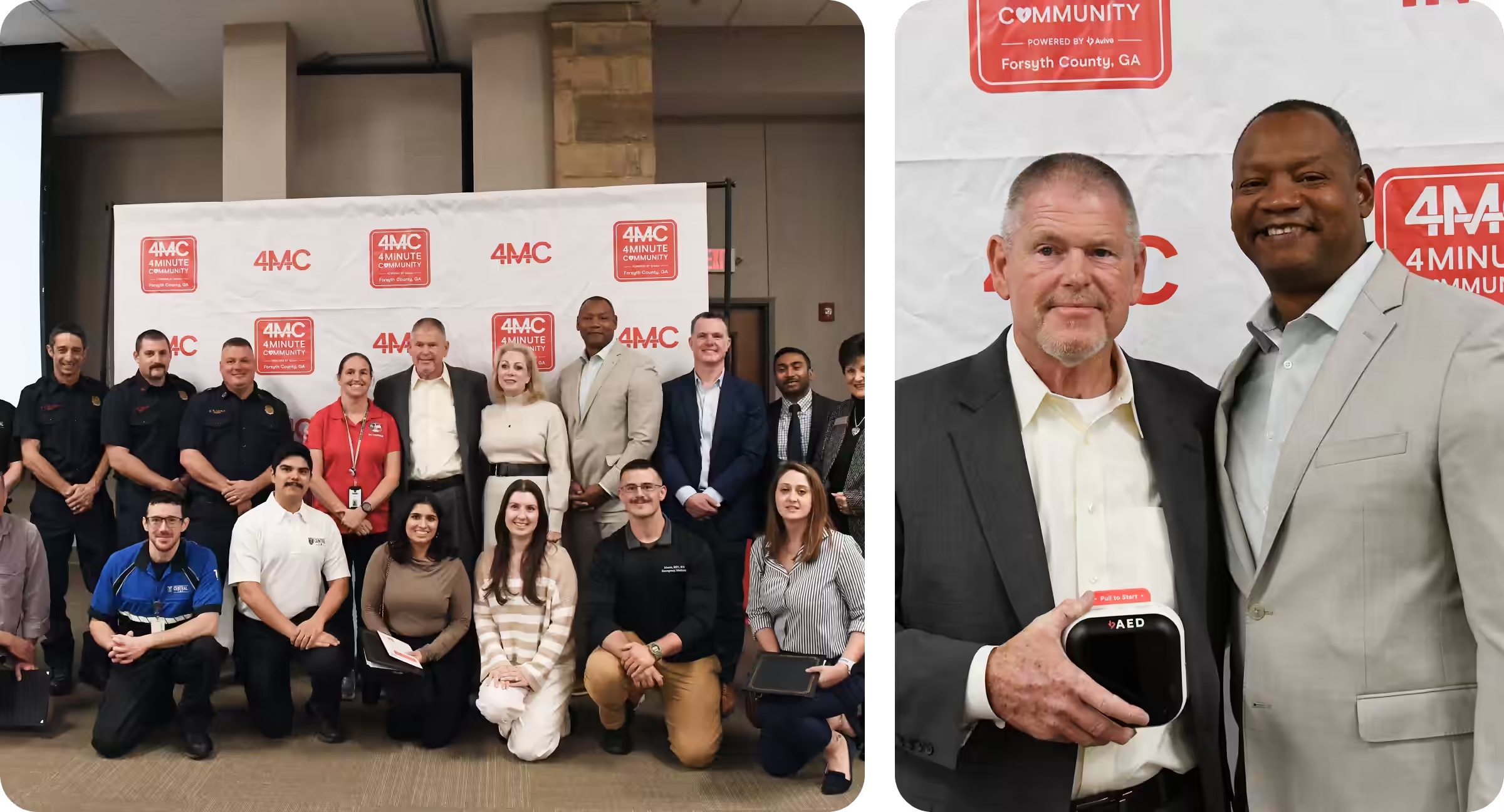
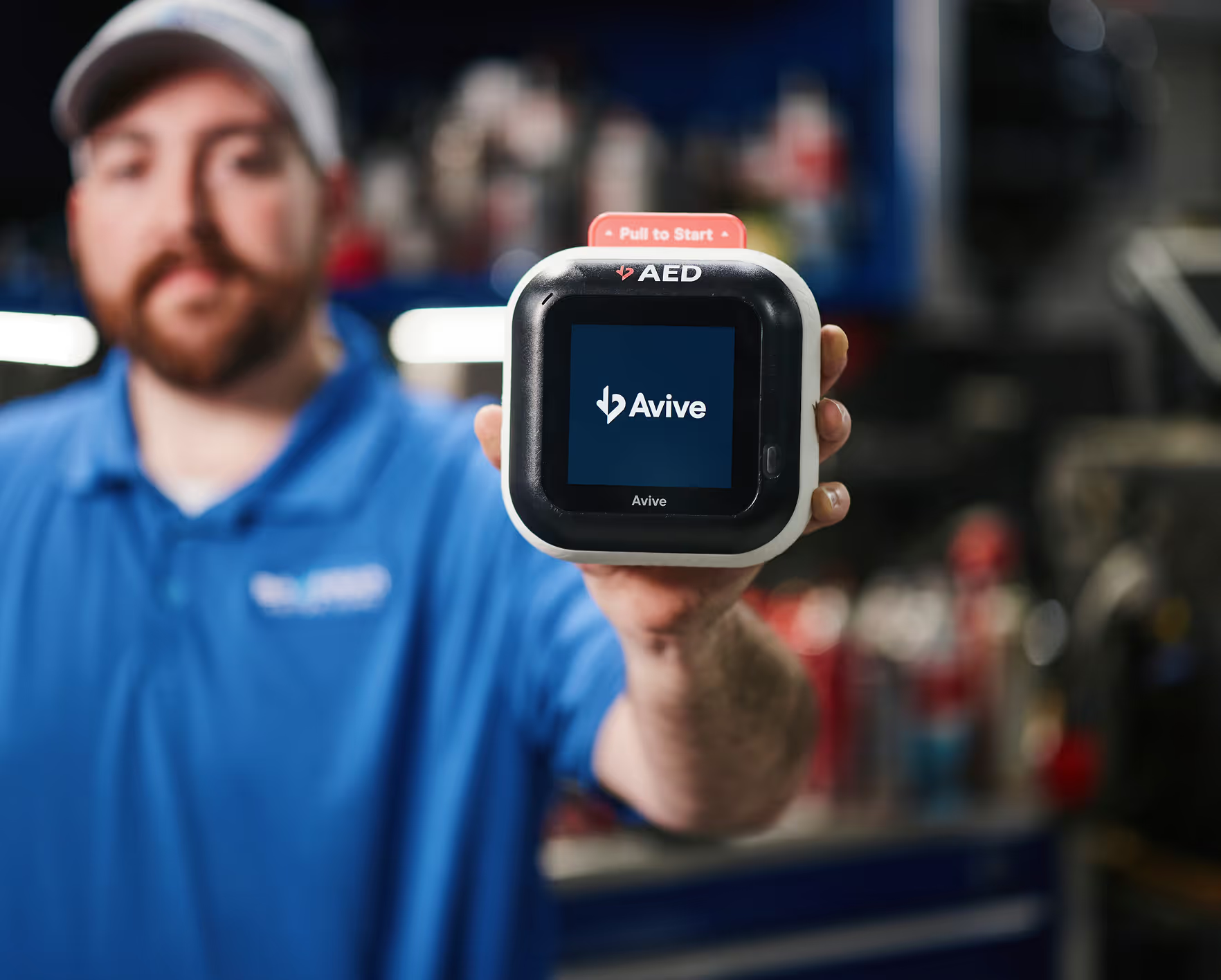
In partnership with Avive Solutions, Northside Hospital Foundation, Northside Hospital Heart Institute, and the Forsyth County Fire Department, Forsyth County became one of the first communities in the nation to launch the 4 Minute Community Program. Designed to bridge the critical gap between a sudden cardiac arrest and the arrival of professional responders, the program leverages historical SCA data to strategically equip CPR-trained citizen volunteers - known as Cardiac Arrest Rapid Engagement (CARE) team members - with Avive Connect AEDs. When a cardiac arrest occurs within a one-mile radius, 911 telecommunicators can alert and dispatch nearby CARE team members through a mapping system, ensuring an AED arrives on scene as quickly as possible while emergency crews are en route. The Avive Connect AED uses REALConnect™ Software and Intelligent Response technology to integrate directly with 911 systems, flashing a red screen, sounding an alarm, and providing step-by-step CPR and defibrillation guidance to responders - creating seamless coordination between citizen volunteers, technology, and emergency services.
The program’s impact was powerfully demonstrated on July 24, 2025, when Vince became the first life saved in Forsyth County through the 4 Minute Community Program. Rapid action by community volunteers and first responders using Avive Connect AEDs resuscitated him after he suffered sudden cardiac arrest, marking a significant milestone in community-based cardiac care. Today, Vince is back home with his family - living proof that when trained citizens, intelligent technology, and 911 systems are connected, lifesaving care can begin long before sirens are heard. His survival underscores the life-saving potential of the program, which has helped save numerous lives nationwide by delivering timely defibrillation through nearby trained volunteers.
"RapidSOS and our partners, which includes Avive, are bringing communities and technology together. Regardless of where you are, where you work, live, play, and what you're doing in your life, you should be connected to emergency services and have this technology. We’re not replacing the humans that are in the middle of that, but actually equipping them with data that's layered so that our field responders and 911 centers know exactly what is coming in, what resources to send."
Karin Marquez
Chief Public Safety Brand Officer, RapidSOS
“Our STEMI team was alerted that we had a cardiac arrest coming into the emergency room. At that point, under normal circumstances, we would have very little information. We would not know what had caused the arrest. Because of the Four Minute Community project and the Avive device, we're able to get information to us before the patient even arrives.”
Christopher Leach, MD
Interventional Cardiologist, Northside Hospital

Share